


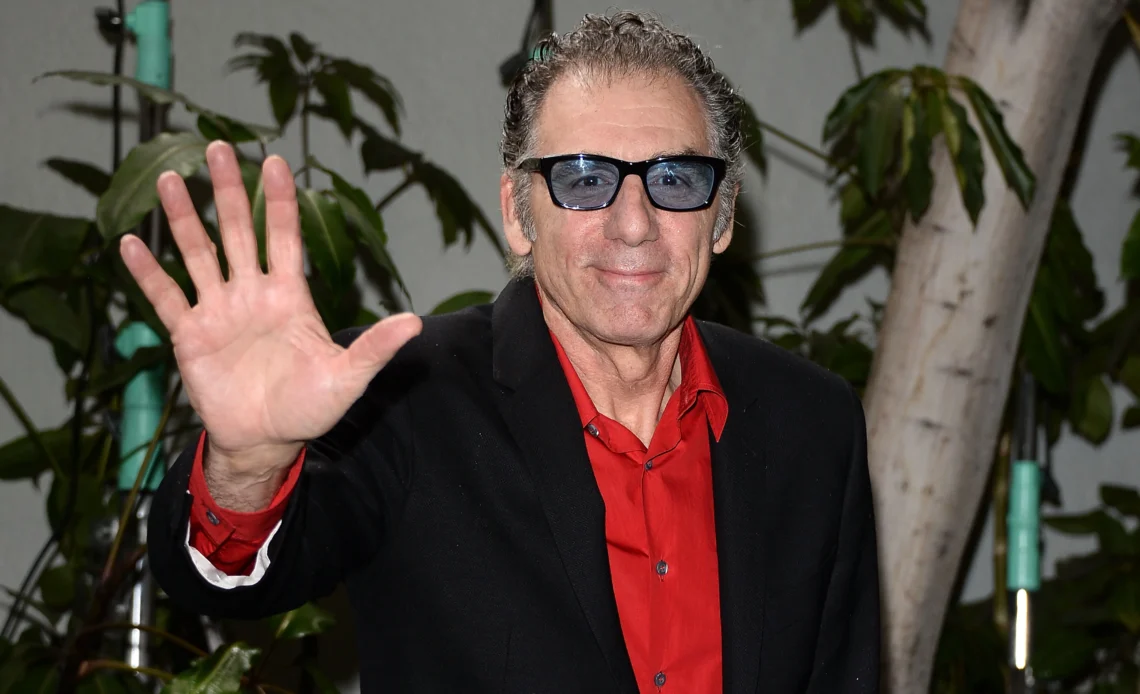
Michael Richards known for playing Cosmo Kramer on the hit show Seinfeld now opens up about the tougher less public parts of his life in his book Entrances and Exits which came out on June 4. While Richards’ comedy skills have made countless people laugh, his personal life hasn’t matched the fun character he played on TV. His book shows a man dealing with deep doubts, feelings of not being good enough, and inner battles that many people didn’t understand, all starting from a rough childhood and a tricky relationship with being famous.

A Tough Start
Richards’ story starts with a tragic family secret. In 1948, a stranger forced himself on his mother, Phyllis Nardozzi when she was 26 years old. Abortion was illegal and risky then so she thought hard about giving Richards up to adopt after his birth. In the end, she chose to raise him by herself, but this choice brought a lot of emotional stress. For most of Richards’ early years, his mother didn’t tell him the truth about where he came from. At first, she said his father had died in World War II, a lie that seemed good but created a fake image of a hero dad that Richards would later dislike. As Richards got older, she changed her story saying his father had died in a car crash.
The contradictory stories added to Richards’ uncertainty and self-doubt. Learning about his real background—that a violent act led to his conception—shocked him to his core. The fact that his mother once thought about ending the pregnancy or giving him up, and that she felt society pushed her into a corner, burdened him his whole life. It makes sense that Richards grew up feeling unwanted, which turned into a big source of rage and inner turmoil.
How Feeling Unwanted Affected His Mind
Richards’ emotional issues stemmed from a core belief that he lacked worth or love. “I had to come to terms with knowing I was unwanted or that my mother wanted to get rid of me,” he says in the memoir. This basic hurt, he explains, turned into a lifelong source of rage, feelings of being less than others, and a temper that would sometimes get out of hand. While his outer self as Kramer seemed loud, carefree, and over-the-top inside he felt inadequate and rejected.
The knowledge of his background took a toll on Richards , with wide-ranging effects. He often thought he wasn’t good enough—for his offered roles, his achieved fame, or the love and admiration people gave him. This constant feeling of not measuring up led him to reject some of his career’s biggest chances. He said no to hosting Saturday Night Live twice, a well-known fact, and turned down a star on the Hollywood Walk of Fame because he felt he didn’t deserve such honors. “I didn’t feel deserving,” he said looking back on his choice to pass on these high-profile chances.
The Height of Fame: Success Without Satisfaction
Many actors dream of starring in a hit sitcom like Seinfeld seeing it as the high point of their career. But for Richards even this big success didn’t quiet his inner critic. He struggled with self-doubt throughout his time on Seinfeld wondering if he was up to playing Kramer. Every new episode brought more stress, and as the show got more popular, Richards felt more nervous. His worries grew along with the show’s fame.
The audience’s loud laughter and positive reviews didn’t satisfy Richards. He always thought he could improve and felt burdened by Kramer’s larger-than-life character. Richards remembers thinking, “I don’t like myself as much as they like me. They wouldn’t like me if they knew the real me.” This worry—that people loved a made-up character and not his true self—troubled him .
The huge success of Seinfeld put extra stress on Richards. As the show kept going, people wanted more from him, and he found it hard to meet their expectations. It wore him out to keep giving top-notch performances. Even though fans loved him, Richards felt it was too much to handle. He thought the praise, awards, and fame were empty because they were for Kramer, not him. This made the gap between his TV character and real self even bigger, which made him feel worse about himself.
:max_bytes(150000):strip_icc()/michael-richards-seinfeld-052224-971171fea51c47908b0745c7f831ad77.jpg)
Missed Chances and Career Stumbles
Richards’ feelings of unworthiness and self-doubt had an influence on his time on Seinfeld and his career choices. When Seinfeld ended, he got an offer to play the lead in Monk, a detective comedy-drama that became a hit with critics. But Richards said no thinking he wasn’t up to the task. He chose to star in The Michael Richards Show instead where he played a clumsy private eye. The show flopped with viewers and critics alike, getting axed after just a few episodes. Richards felt frustrated with the show, and in his memoir, he talks about losing his cool during a writer’s meeting yelling, “It’s not funny! I’m not funny! I’m dead here!”
This outburst showed how troubled Richards was. Even though Seinfeld was a huge hit, he had a hard time finding his place in show business. When The Michael Richards Show flopped, it made him doubt himself even more and he missed out on other chances. He kept feeling unsure of himself, which made it tough for him to take on new roles or interact with fans.

The Weight of Fame: Dealing with Success and Emotional Scars
Richards’ memoir also talks about his tricky relationship with being famous. Many actors see fame as a prize for their hard work and skill, but Richards saw it . He liked the chances fame gave him, but it also made him feel more unsure of himself. He speaks about how much he admires Seinfeld co-creator Larry David, who stayed away from the usual celebrity lifestyle. Richards tells a story about David known for his direct and sometimes harsh humor, who would stop his standup shows if he didn’t like how the crowd reacted. “Larry told me later that he didn’t like the way the audience felt. He’s like the Soup Nazi. If he doesn’t like the audience, ‘No comedy for you!'” Richards writes thinking about how David’s view on fame and doing well matched his own mixed feelings.
Richards also tells a funny story from his Seinfeld days. At a big NBC event in 1994, his tuxedo didn’t show up in time so he went to the fancy dinner in a hotel bathrobe. This odd choice made people crack up, and Richards sees the moment as a “flash of genius.” In his typical mix of jokes and deep thoughts, he compares the experience to a spiritual call mentioning different religious and philosophical ideas to show how fame often felt like a weird and too-much experience for him.
The 2006 Onstage Incident
Richards’ career took a big hit in 2006 when he got caught up in a notorious incident during a standup comedy show at the Laugh Factory in Los Angeles. The trouble started when some Black and Hispanic guests, who showed up late began to heckle and talk over Richards’ performance. In response, Richards unleashed a string of racist comments. He used the N-word and brought up lynching and Jim Crow laws. A member of the crowd caught the incident on their cell phone. TMZ then shared the video online causing it to spread.
The people Richards went after included a guy named Kyle Doss. Doss later said Richards had made offensive remarks about “Mexicans and Blacks being loud” before going on with his act. When Doss’s buddy told Richards they didn’t think he was funny, the comic hit back with racist insults that set off the well-known tirade. Richards gave the group the finger and lashed out at them making things worse.
For three days, no one noticed what happened. Then people started sharing the video of the show. On November 20, news outlets began to pay attention. Richards apologized to everyone on The Late Show with David Letterman. He tried to say sorry in public for what he did, but people didn’t buy it. Jerry Seinfeld tried to make sure audience listened to him, but the apology didn’t change anything. Richards said he wanted to handle the heckling by going over the top, but his idea backfired and made things a lot worse.
After he apologized on Letterman, Richards also contacted civil rights leaders Jesse Jackson and Al Sharpton to say sorry for his comments. He went on Jackson’s radio show as a guest to try to make amends for his actions. However, Doss one of the hecklers from that night said he didn’t accept Richards’ apology. He criticized Richards for only apologizing after the video came out instead of reaching out to the group .

The incident had a major impact on Richards’ public image, and a Gallup poll done right after showed that his favorability ratings had dropped. 41% of people surveyed saw Richards in a positive light, which was very different from the 60% and 70% favorability ratings other Seinfeld cast members enjoyed. Also, 45% of non-white respondents had a bad opinion of Richards after the controversy.
The incident soon became a target for jokes and discussion on many TV programs, including South Park, Family Guy, Mad TV, Extras, and WWE’s Monday Night Raw. Richards himself poked fun at the situation in a 2009 episode of Curb Your Enthusiasm where he played a made-up version of himself and mentioned the Laugh Factory event. In 2008, rapper Wale used parts from the incident and Richards’ apology in his song “The Kramer,” which was part of his album The Mixtape About Nothing inspired by Seinfeld.
Even though he said sorry, the event had a big impact on Richards’ work life. A year after his outburst, he did a voice role in the cartoon movie Bee Movie, which Jerry Seinfeld made. In 2009, he got together with his Seinfeld buddies for a spot on Curb Your Enthusiasm. But Richards quit doing stand-up comedy after all the fuss. In a 2012 episode of Seinfeld’s online show Comedians in Cars Getting Coffee, Richards talked about the event. He said it still bugged him and was a big reason he stopped doing live shows.
Although Richards was beyond sorry about his behaviour, the racist outburst left a big stain on his reputation. It shined a light on the bigger problem of racism in show business and the tough spots comedians find themselves in when they go too far moving from edgy jokes to flat-out insults.
A Health Crisis and the Search for Peace
In 2018, Richards had to deal with another big problem when doctors told him he had stage 1 prostate cancer. He says he accepted the news at first. “I thought, ‘Well, this is my time. I’m ready to go,'” he remembers. But then he started thinking about his young son Antonio, which pulled him out of his sad thoughts. Richards decided to fight for his life and had surgery to take out his prostate. The doctors said that without this operation, he would have died within eight months.
